
What's inside
As an Amazon Associate I earn from qualifying purchases. This post may contain affiliate links at no extra cost to you.
The best battery for student drones is not a specification contest, because a student drone battery has a job no other battery in technology quite shares: it must fit one exact drone — there is no universal drone battery, and a battery that does not belong to your aircraft is not a bargain but a paperweight — it must deliver its flights inside the rigid timetable of a class, a club, or a student’s free afternoon, and it must be charged, stored, and occasionally dropped by learners, which makes its safety system and its owner’s habits as much a part of the product as its capacity. The batteries in this guide are therefore judged as a school would judge them: by exact compatibility with the drones students actually fly, by how a set of them covers a lesson or a practice session when rotation and charging time are counted honestly, by the protections their makers build in and describe, and by the total cost of a working fleet — because one battery is a demonstration, and three batteries and a charging hub are a curriculum.
The comparison fields the real, currently sold flight batteries for the drones that dominate classrooms and student clubs: DJI’s Intelligent Flight Batteries for the Mini series and the Neo, the Ryze Tello’s battery for the programmable classroom drone, Potensic’s ATOM series battery for the budget training fleet, and DJI’s Avata 2 battery as the step-up for the older student’s FPV programme. Prices are typical ranges rather than exact figures, and in this category the genuine article matters: buy batteries from the drone’s maker or an authorised seller, because a flight battery is a lithium energy store that an aircraft trusts at altitude, and counterfeit or no-name copies — whatever their labels promise — are a false economy measured in swollen cells, shortened lives, and aircraft. Capacity in milliamp-hours or watt-hours, voltage, weight, stated flight time under the maker’s test conditions, charging method, and compatibility are each maker’s specification for the current exact battery and drone model and should be confirmed in that maker’s current documents before purchase, because DJI alone sells several batteries under similar names for different Mini generations, and the wrong generation’s battery fits nothing you own.
Safety is this category’s first subject, and it is taught, not assumed. Lithium drone batteries are charged only with the charger or hub their maker specifies, on a non-flammable surface, supervised, never overnight in a classroom or a bedroom, and never while damaged, swollen, puffed, or after a crash until they have been inspected as the maker directs — a swollen battery is retired, not rested, and is disposed of through a proper battery recycling or hazardous-waste route, never in ordinary rubbish. Batteries are stored at the partial charge their makers recommend for storage, in a cool, dry place, in the fire-resistant bags or cases many programmes use as a matter of routine, and they are transported and handled under the school’s or club’s own rules, which outrank any guide. Drones themselves are flown under the law where you are — registration, airspace, and school-ground rules as your authority and institution state them — and a battery programme that teaches those habits is teaching the actual subject, of which flight time is only the visible part.
Our Top Picks
Best Battery for Student Drones by Programme
The classroom fleet: Tello and Neo batteries bought as a rotation
For a taught class — programming with the Tello in its maker’s educational framing, or first flight with the Neo in DJI’s stated classes — the battery decision is a timetable decision. A single battery flies, then charges for longer than it flew, in the makers’ stated charging times; a class of thirty students and one battery is a lecture, not a lesson. The working pattern is a rotation: enough batteries for the aircraft in use to fly in sequence, a charging hub of the maker’s stated design keeping the queue moving, and a numbered set — batteries labelled and logged by the programme — so that a tired battery is noticed by its number and not by an aircraft’s behaviour. Budget the fleet that way, from the makers’ documents, before the aircraft multiply: in most programmes the batteries and hubs, across a year, rival the drones as the real investment, and they are the investment that decides whether flight day feels like flying.
The individual student: Mini series batteries and the honest arithmetic of flight time
For the student flying their own Mini — the most common serious student drone in this guide — DJI’s standard Intelligent Flight Battery is the default, and its stated flight time in DJI’s test conditions should be read the way all such figures should: as a ceiling achieved in calm air at a steady pace, from which real flight — wind, manoeuvring, cold, learning — subtracts its share. The practical purchase is two or three standard batteries and the maker’s charging hub, which together convert a twenty-some-minute outing into a genuine practice session. The Battery Plus class, where DJI offers it for the exact model, extends each flight in DJI’s stated figures and adds weight that can change the drone’s regulatory category in some jurisdictions — a fact its documents and your local rules, not a listing, must settle before a student flies it, because a battery that moves an aircraft across a legal line is a decision, not an accessory.
The advanced programme: ATOM value fleets and Avata 2 ambition
Potensic’s ATOM series batteries serve the club or school equipping a fleet on a budget: genuine maker batteries in Potensic’s stated classes for its own aircraft, at prices that let a programme buy the rotation this guide insists on rather than a single heroic pack. DJI’s Avata 2 battery serves the other end — the older student’s FPV and media programme, where the aircraft is a cinewhoop in DJI’s stated design and the battery’s stated performance is matched to a more demanding aircraft and a more supervised setting. Both are bought by the same rules as every row: exact model compatibility from the maker’s documents, genuine supply, rotation arithmetic, and the safety system taught alongside the flying.
Quick Comparison: Best Battery for Student Drones Models
| Model | Key Specs | Best For | Typical Price Range | Rating |
|---|---|---|---|---|
| DJI Mini Series Intelligent Flight Battery | Capacity, voltage, weight and stated flight time classes per DJI documents for the exact Mini model generation | Best battery for student drones overall | $55 – $75 | 4.7 / 5 |
| DJI Neo Intelligent Flight Battery | Capacity, weight, stated flight time and charging classes per DJI documents for the Neo | Best for beginner flight classes | $35 – $50 | 4.5 / 5 |
| Ryze Tello Flight Battery | Capacity, voltage, stated flight time classes per Ryze and DJI documents for the Tello | Best for programming classrooms | $18 – $30 | 4.4 / 5 |
| DJI Mini Battery Plus Class | Extended capacity and weight classes, stated flight time per DJI documents for the exact model | Best extended flight time | $80 – $100 | 4.4 / 5 |
| Potensic ATOM Series Battery | Capacity, stated flight time and charging classes per Potensic documents for the exact ATOM model | Best budget fleet battery | $45 – $65 | 4.3 / 5 |
| DJI Avata 2 Intelligent Flight Battery | Capacity, stated flight time and charging classes per DJI documents for the Avata 2 | Best for FPV programmes | $85 – $110 | 4.5 / 5 |

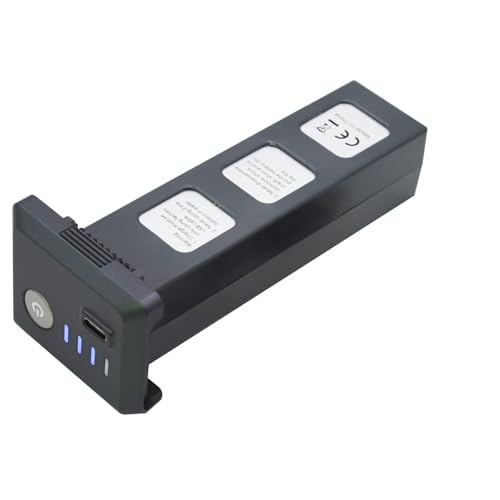
Modular Battery for K600GPS Drone, 2200 mAh Rechargeable Battery, 22 Mins Long Flight Time, Comes with Type‑C Charging Cable, Spare Accessory for K600GPS Drone
As an Amazon Associate we earn from qualifying purchases. Product prices and availability are accurate as of the date/time indicated.

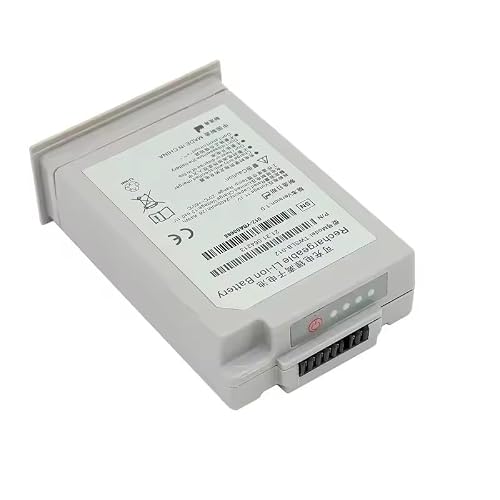
HYFBMTD Drone Parts for 11.1V 2400mAh/26.64WH TWSLB-012 for Rechargeable Battery for EDAN IM12 IM20 IM3 Monitor

As an Amazon Associate we earn from qualifying purchases. Product prices and availability are accurate as of the date/time indicated.
Blomiky 11.1V 3S 2600mAh 28.86Wh Li-Po Rechargeable Battery Compatible with Bwine F7GB2 75 Mins 9800FT SJRC F7 F7S RC Quadcopter Drone / F7


As an Amazon Associate we earn from qualifying purchases. Product prices and availability are accurate as of the date/time indicated.
Compatibility by exact drone model and generation, capacity, voltage, weight, stated maximum flight time under the maker’s test conditions, charging time and required charger or hub, and operating temperature range are each maker’s specification for the current exact battery and must be confirmed in that maker’s current documents before purchase. Prices are typical street ranges for genuine maker batteries as described. Stated flight times are laboratory-condition maxima; real student flights are shorter, as this guide describes.
Detailed Reviews: Best Battery for Student Drones Picks
1. DJI Mini Series Intelligent Flight Battery – Best Overall
The Mini series battery is the student standard because the Mini is the student standard: an intelligent pack in DJI’s stated design, with the maker’s battery management reporting its charge and health to the aircraft and the app as DJI documents, in a weight class that keeps the standard Mini configurations in their intended category in the jurisdictions whose rules turn on it — a sentence to verify for your exact model and your own rules, as this guide keeps insisting, because DJI sells this battery across Mini generations whose documents differ.
Buy it by generation, from the maker’s or an authorised seller’s listing for your aircraft’s exact name, and buy it in the rotation quantity your flying needs — two as a minimum for a real session, three and the hub as the comfortable standard. Treated by the storage and charging discipline in this guide, it will outlast the school year and the next one, which is the review a fleet manager writes.
2. DJI Neo Intelligent Flight Battery – Best for Beginner Flight Classes
The Neo’s battery serves the drone DJI built for the newest beginners: small, light packs in DJI’s stated classes whose modest stated flight time suits the Neo’s short, close, supervised sorties, and whose price lets a programme hold the rotation a class consumes. In a beginner syllabus — take off, hover, the square, the landing, next student — a battery per student-turn is the natural unit, and this pack is priced like one.
Confirm the charging arrangement for a fleet in DJI’s documents — the hub or multi-charger route that keeps a class set ready — and label every pack with its number from the first day. A Neo programme’s success is a logistics photograph: aircraft in a row, batteries numbered, the hub’s lights in order, and this battery is the cell that photograph is built from.
3. Ryze Tello Flight Battery – Best for Programming Classrooms
The Tello’s battery powers the classroom’s most-taught drone: a small pack in its makers’ stated class for an aircraft whose lessons are code as much as flight — take off, the programmed square, the flip the students earned — flown indoors and low, in the supervised setting the Tello was designed for. Its stated flight time in the documents is a lesson’s length, which is the correct size for a battery whose aircraft lands between every student’s turn.
Its fleet arithmetic is the kindest in this table: at its price, a class set of spares is a line item rather than a grant application, and a programme should hold that set, with the multi-battery charging arrangement its makers describe, because a programming class stopped by a flat battery teaches only patience. Retire any pack that swells or shortens, by the safety rules in this guide, and the fleet will run for years of cohorts.
4. DJI Mini Battery Plus Class – Best Extended Flight Time
The Battery Plus class trades weight for minutes, in DJI’s stated figures for the exact models that accept it: longer stated flight times for the student whose sessions are limited by travel to a flying site, by a project that needs a full survey pattern, or by the simple desire to practise manoeuvres in one flight rather than three. For the right student, those minutes are a curriculum.
Its condition is regulatory and must be settled before purchase, in DJI’s documents and your jurisdiction’s current rules: the heavier pack can carry the aircraft across a weight threshold that changes its category and the obligations on its pilot, and a student programme must never discover that from an inspector. Settled lawfully, it is a fine tool; skipped, it is the one battery in this table that can make a legal drone illegal, which is why it is reviewed with its paperwork first and its minutes second.
5. Potensic ATOM Series Battery – Best Budget Fleet Battery
Potensic’s ATOM batteries are the genuine maker packs for the budget fleet’s aircraft, in Potensic’s stated classes, and their virtue is fleet arithmetic: a club can hold a full rotation — enough packs for every aircraft to fly its turns while the hub works — at a total that leaves the programme’s money for the aircraft, the spares, and the insurance of doing things properly. In budget education, that arithmetic is not a compromise; it is the difference between a programme and a demonstration.
Buy them for the exact ATOM model in Potensic’s documents, from the maker or its authorised channels, and run them under the same numbered, logged discipline as the DJI fleets. A budget battery treated professionally will out-serve a premium battery treated casually, across a school year, every time — a sentence this guide would happily have printed on the fleet cupboard.
6. DJI Avata 2 Intelligent Flight Battery – Best for FPV Programmes
The Avata 2’s battery serves the most demanding student aircraft in this table: an FPV cinewhoop in DJI’s stated design whose flying is faster, whose setting must be more supervised, and whose stated flight time in DJI’s documents is matched to short, intense sorties rather than long cruises. For the older student’s media or FPV programme, under its institution’s rules and the law’s, it is the correct energy for a serious aircraft.
Its programme discipline is the table’s strictest, as its aircraft demands: batteries inspected after every hard landing as DJI directs, charging supervised without exception, and the rotation sized to the session’s real length rather than to ambition. In that setting, it completes the guide’s arc — the same habits, from the Tello’s first hop to the Avata’s first dive, which is what a student drone programme is actually for.
Buying Guide: Choosing the Best Battery for Student Drones
Match the exact model, buy genuine, and size the rotation to the timetable
Start with the aircraft’s full name — maker, model, and generation — and buy only the battery its maker lists for it, in that maker’s current documents, from the maker or an authorised seller. Treat any battery that promises compatibility across many models, at a fraction of the genuine price, as what it is: an unknown lithium store that an aircraft will trust at height, from a maker whose address is a mystery, and decline it at any discount. Then size the purchase to the session, with arithmetic from the makers’ stated figures: a battery’s realistic flight minutes — the stated figure discounted for wind, manoeuvring, temperature, and learning, as this guide describes — against the session’s length, and the stated charging time against the gaps, gives you the rotation count, to which the maker’s charging hub, where offered, is the force multiplier that turns a queue into a system. Add the programme’s furniture in the same order: numbered labels or a log for every pack, storage bags or cases of the kind programmes standardise on, and a spare-aircraft-parts budget that this guide mentions only to say the batteries should not consume it. Write the fleet’s rules where the students can see them — who charges, where, supervised how, and what a swollen battery’s retirement looks like — because a battery programme is a taught routine before it is a shopping list.
Charge, store, and retire by the makers’ discipline, every time
Charge only with the charger or hub the maker specifies for the exact battery, on a hard, non-flammable surface, in sight of a responsible person, and never leave charging batteries unattended overnight or in an empty building — the rule that every school programme in this field treats as absolute, because the rare lithium failure is a fire and the supervision is the whole mitigation. Let a flown battery rest and cool before charging, as the makers’ guidance describes, and a charged battery cool before flight. Store batteries at the partial storage charge the maker recommends for the exact model — several makers’ intelligent batteries manage this themselves on a stated schedule, which their documents describe and which does not excuse the owner from checking — in a cool, dry place away from sun and heaters, in the programme’s designated bags or a metal or fire-resistant container as your institution’s rules direct. Inspect every battery on its maker’s schedule of common sense: swelling or puffing, a case cracked or punctured in a crash, a connector damaged, a flight time suddenly shortened — any of these retires the pack from flight immediately, to be discharged and disposed of through your local battery recycling or hazardous-waste route exactly as that authority directs, never in ordinary rubbish and never back into an aircraft to see if it is really bad. Keep the log: cycles, incidents, retirements, by battery number, because a fleet with a memory is a fleet whose failures arrive as paperwork rather than as events.
Fly the programme lawfully, and let the batteries teach the habits
Keep the whole enterprise inside its permissions: the drone rules where you fly — registration and pilot requirements, airspace and altitude, the school’s or landowner’s consent — read from your authority’s current materials and your institution’s policies, with the Battery Plus weight question in this guide settled in those documents before the pack is flown. Brief every session the same way: batteries inspected and seated as the aircraft’s maker directs, charge levels checked against the session’s plan, a landing reserve kept sacred — student flights should end with the reserve the programme sets, not with the aircraft’s low-battery behaviour as the lesson — and the flight area checked for the people, property, and airspace that the law and ordinary care put first. After the session, the routine reverses: batteries out, inspected, rested, charged or stored by the rules above, logged, and the aircraft’s next need noted while it is still today’s memory. The best battery for student drones is finally a habit with a label on it: genuine, exactly matched, rotated by arithmetic, charged under supervision, stored at rest, and retired without sentiment — and any battery in this table, bought and run inside that discipline, will power a programme in which students learn the thing drones actually teach, which is not flight at all, but the care of a machine that flies, kept to the standard its energy deserves.
Frequently Asked Questions About the Best Battery for Student Drones
What is the best battery for a student drone?
The one its maker made for it, bought genuine, in the quantity your timetable requires. For the commonest student aircraft, that is DJI’s Intelligent Flight Battery for the exact Mini generation you own, as this table’s leader; the Neo and Tello batteries for their classroom aircraft; Potensic’s ATOM packs for a budget fleet; and DJI’s Avata 2 battery for an FPV programme. There is no universal student drone battery, and compatibility by exact model and generation — read in the maker’s current documents — is the first and non-negotiable specification. Beyond it, judge by the rotation arithmetic: enough genuine batteries, and the maker’s charging hub, to keep your class or practice session flying while others charge, because a single battery, however excellent, is a demonstration and a rotation is a programme.
How many batteries does a student or a class need?
Work it out from the session, using the makers’ stated figures discounted honestly. A battery’s stated flight time is a calm-air maximum; a student’s real flight — manoeuvring, wind, cold, pauses — returns less, and charging takes longer than flying, as the makers’ stated charging times show. For an individual student, two batteries make a real outing and three, with the maker’s hub, make a comfortable practice session with a reserve. For a class, count aircraft and turns: enough batteries for every aircraft to fly its sequence of student turns while the hub cycles the spent packs, which for most programmes means at least two to three packs per aircraft, numbered and logged so their health is tracked by identity. Keep a landing reserve in the plan — batteries are not flown to empty as a habit, both for the aircraft’s safety and the pack’s life, as the makers’ guidance describes — and let a month of the programme’s own log, flights per pack per session, correct the arithmetic for your exact aircraft and timetable.
How should student drone batteries be charged and stored safely?
By the maker’s discipline, without improvisation. Charge with the charger or hub specified for the exact battery, on a non-flammable surface, supervised by a responsible person, and never overnight or unattended in a classroom or home; let flown batteries cool before charging, as the makers direct. Store at the partial storage charge the maker recommends for the model — some intelligent batteries self-manage toward it on a stated schedule, which their documents describe — in a cool, dry place, in the fire-resistant bags or containers your programme standardises on, away from sun, heaters, and anything flammable. Inspect before every use: a swollen, puffed, cracked, or crash-damaged battery, or one whose flight time has suddenly collapsed, is retired from flight at once and disposed of through a proper battery recycling or hazardous-waste route, never in household rubbish. Keep a log by battery number — cycles, incidents, retirements — and teach the whole routine as part of the syllabus, because a student who learns lithium discipline with a Tello will carry it to every aircraft and device they ever own.
Does the DJI Mini Battery Plus change the drone’s legal category?
It can, and that is why this guide treats it as a paperwork purchase before it is a flight-time purchase. The Plus battery’s extra capacity comes with extra weight, stated in DJI’s documents for the exact model, and in jurisdictions whose drone rules turn on an aircraft’s take-off weight — the sub-250-gram class being the famous threshold — fitting the heavier pack can move the aircraft into a different category, with different registration, pilot, and operating obligations. Those rules are your jurisdiction’s, they change, and they are not stated reliably by retailers or by guides, including this one. Before buying or flying a Plus pack, read DJI’s stated weight for the battery and your aviation authority’s current rules for the aircraft’s resulting weight, and comply with whatever category results — or choose the standard battery and keep the category you planned for. A student programme should model exactly that diligence, because the lesson that a battery can change an aircraft’s legal identity is worth more than the extra minutes in the air.
Related guides
- Best Switch for Student NAS Storage: 6 Network Switches for Student NAS in 2026
- Best Cheap Baby Monitor for Parents in 2026: 7 Monitors That Offer Clear Video, Reliable Audio, and Peace of Mind for Parents
- Best Headphones vs Soundbar for Gaming in 2026: Positional Audio, Voice Chat, and Living-Room Freedom Compared for Competitive and Cinematic Players
- Best Drone for Student Videography in 2026: 7 Drones That Offer 4K Video, Stable Flight, and Reliable Use for Student Videography
More from Amazon
Programs that pair well with the guide above. Offers and eligibility are set by Amazon and may change.
Set up recurring deliveries of everyday items on eligible products. Terms and savings are set by Amazon.
Explore Subscribe & SaveFree shipping on eligible items, Prime Video and more. Eligible new members can start with a free trial.
Start a Prime free trialAudiobooks and podcasts to listen to on the go. Eligible new members can start with a free trial.
Try Audible freeRead from a large library of eBooks and audiobooks on any device. Check Amazon for current plans.
Explore Kindle UnlimitedAs an Amazon Associate we earn from qualifying purchases.

Write Your Review
No reviews yet. Be the first to share your experience!