
What's inside
- Best Headphones for Gamers on Mobile: Latency, Microphones, and Fit for Long Sessions
- Best Headphones for Gamers on Mobile: Quick Comparison
- The Six Mobile Gaming Headphones Reviewed
- Buying Guide: How to Choose the Best Headphones for Gamers on Mobile
- Frequently Asked Questions About Headphones for Mobile Gamers
As an Amazon Associate I earn from qualifying purchases. This post may contain affiliate links at no extra cost to you.
The best headphones for gamers on mobile are not simply good headphones used near a phone, because mobile gaming imposes three demands that music listening forgives: latency low enough that the footstep and the gunshot arrive when the screen says they happened, a microphone that keeps a squad’s callouts intelligible over the bus, the cafe, and the household, and a fit and battery that survive sessions measured in ranked ladders rather than in songs. This guide grades six real, currently sold headphones and earbuds for mobile play specifically, across the connection types that define the category, true wireless earbuds with dedicated gaming modes, Bluetooth over-ears with low-latency modes, and the wired and USB-C options whose latency is zero by physics and whose existence disciplines every wireless claim in the table. It closes with a buying guide that matches the headphone to the games you actually play, because a battle royale’s audio economy, footsteps, direction, voice, is a different purchase from a rhythm game’s timing or a story game’s cinema, and the hundred decisions in between should be made by the library rather than by the marketing.
Learn the latency problem honestly before the table, since it is the category’s founding anxiety and its most exaggerated one. Standard Bluetooth audio carries a delay commonly in the few-hundred-millisecond class, codec and device dependent, which the brain forgives in video, where platforms quietly delay the picture to match, and punishes in games, where the tap, the shot, and the sound must agree inside a window competitive players feel at well under a tenth of a second. The wireless answers are real: gaming modes that trade a little audio quality and battery for a low-latency codec path, commonly bringing the delay into the tens of milliseconds on earbuds designed for it, and proprietary 2.4GHz dongle connections on the gaming headsets that reach wired territory at the price of a dongle the phone must host. The honest calibration is that most mobile games, played at most levels, are served by a good gaming mode, while rhythm games and the highest competitive tiers remain wired’s home ground, a verdict this guide’s table encodes by including both and grading neither with the other’s yardstick.
Our Top Picks
Best Headphones for Gamers on Mobile: Latency, Microphones, and Fit for Long Sessions
Connection Types Ranked for Mobile Play
Choose the connection by the phone in your hand as much as by the headphone. True wireless earbuds are the mobile native form, pocketable, case-charged, and increasingly equipped with gaming modes and multipoint, and their latency in gaming mode is the class’s solved-enough problem for shooters and racers at ordinary competitive levels. Bluetooth over-ears bring the long sessions’ comfort, the bigger drivers’ soundstage, and batteries measured in days, with gaming modes on the gaming-bred models and ordinary Bluetooth latency on the music-bred ones, a distinction the buyer must check per model since the same brand sells both philosophies. USB-C wired, through the port every modern phone has and the headphone jack most have lost, delivers zero-latency audio and a microphone path with no battery in it at all, and the dongle DACs and USB-C earbuds in that world are the rhythm gamer’s and the purist’s answer, at the price of the cable’s eternal negotiations with pockets and grips. The 2.4GHz gaming headsets, console royalty, serve the phone only where a USB-C dongle model is chosen and the phone’s grip can host it, a niche this guide notes and does not build its table upon. Grade your own library against that map and the table below resolves into a shortlist quickly.
Microphones and Voice: The Squad’s Specification
Mobile voice chat is the category’s harshest test because it is performed in the world’s noise rather than the bedroom’s: the earbud’s microphone sits in the ear, far from the mouth, and its clarity is an algorithm’s achievement, beamforming and wind reduction separating the callout from the street; the over-ear’s boom, where fitted, wins by geometry what the algorithm approximates, which is why the detachable-boom gaming models remain the voice standard for the player whose squad plays to win. Test any candidate where you will actually play, a call to a friend from the bus stop outranking every studio sample, and weight the sidetone and the mute’s accessibility, a hardware mute found by touch being a feature whose value is understood in the first moment it is needed mid-match. The game’s own settings share the blame or the credit, voice chat’s noise suppression and the phone’s microphone permissions being configuration the steps will include, since a surprising share of bad mobile voice is a setting wearing a hardware costume.
Sound for Games: Footsteps, Soundstage, and the EQ That Helps
Grade gaming sound by the mix’s information rather than by its spectacle. The competitive virtues are directional accuracy, the footstep placed where the enemy is; separation, the reload heard through the explosion; and a midrange-forward clarity that keeps callouts and cues intelligible at the volumes a long session’s ears can sustain, all of which a wide-feeling soundstage and a restrained bass serve better than the cinematic boom that flatters trailers and buries footsteps. An app equalizer with a game or footsteps preset, or the discipline to cut the bass and lift the presence bands yourself, is the strongest sound feature a mobile gaming headphone can offer, since titles mix differently and ears differ more. For the story and cinema player, the virtues invert, immersion, weight, and musicality leading, and the same table serves them with different rows, which is why this guide’s rankings name their constituency per product rather than pretending one tuning rules the library. Battery and fit close the section as they close every session: earbuds judged by the case’s total across a travel day, over-ears by the clamp’s kindness at hour three, both by whether they are still being worn, comfortably and charged, when the ladder’s last match ends.
Best Headphones for Gamers on Mobile: Quick Comparison
| Mobile Gaming Headphone Model | Key Specs | Best For | Typical Price Range | Rating |
|---|---|---|---|---|
| Razer Hammerhead Pro HyperSpeed class | True wireless, low-latency gaming mode / dongle class in line, ANC positioning, case charging | Best headphones for gamers on mobile overall | $150 – $200 | 4.6 / 5 |
| ASUS ROG Cetra True Wireless class | True wireless gaming earbuds in class, low-latency mode in line, ANC positioning | Best gaming earbuds alternative | $90 – $130 | 4.5 / 5 |
| SteelSeries Arctis Nova 4 / mobile class | Over-ear gaming headset class, 2.4GHz and Bluetooth in line by model, detachable mic positioning | Best over-ear for mobile and console | $120 – $180 by model | 4.5 / 5 |
| JBL Quantum 350 / TWS class | Gaming line in class, low-latency positioning, over-ear and TWS variants in line | Best value gaming brand | $80 – $150 by model | 4.3 / 5 |
| Soundcore VR P10 / gaming earbuds class | True wireless with USB-C dongle class in line, low latency positioning, value price | Best dongle earbuds value | $60 – $90 | 4.3 / 5 |
| Moondrop / USB-C wired IEM class (e.g., Chu II DSP class) | Wired USB-C in-ear in class, zero-latency by design, DSP tuning positioning | Best wired zero-lag budget | $20 – $40 | 4.4 / 5 |
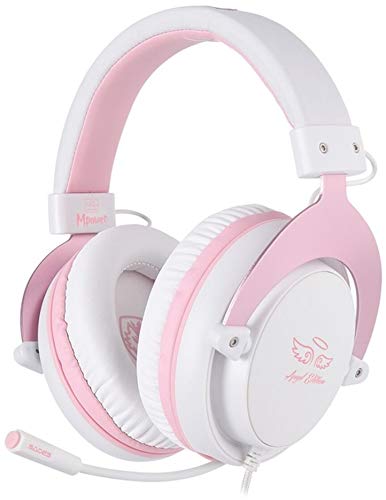
SADES MPOWER Stereo Gaming Headset for PS4, PC, Mobile, Noise Cancelling Over Ear Headphones with Retractable and Flexible Mic & Soft Memory Earmuffs for Laptop Nintendo Switch Games-Angel Edition



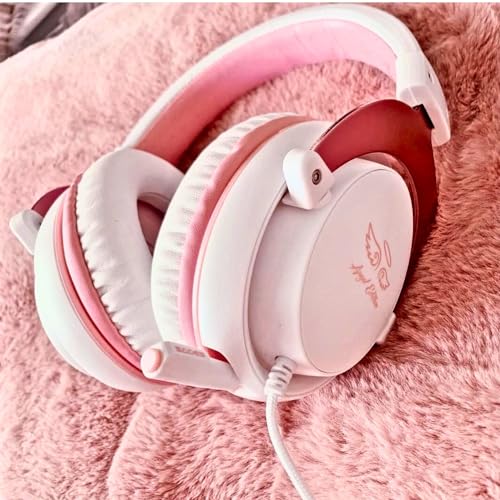
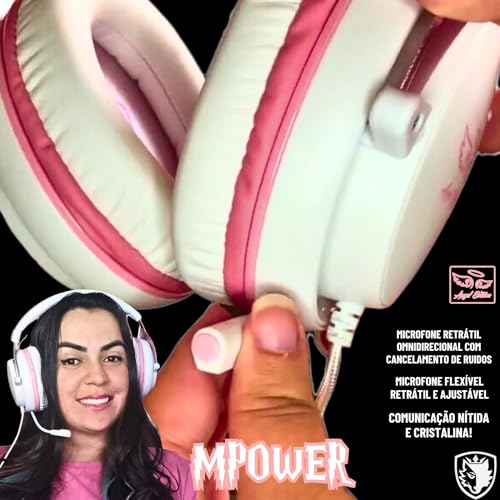
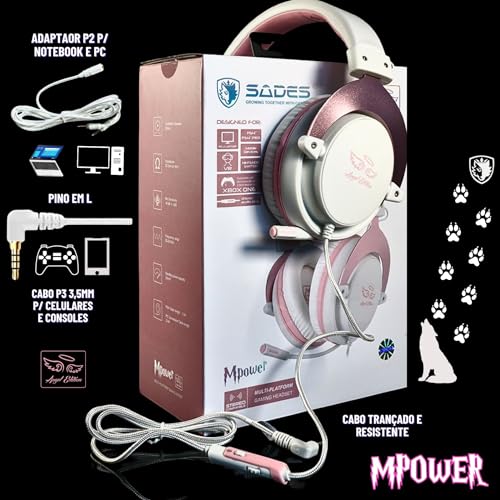
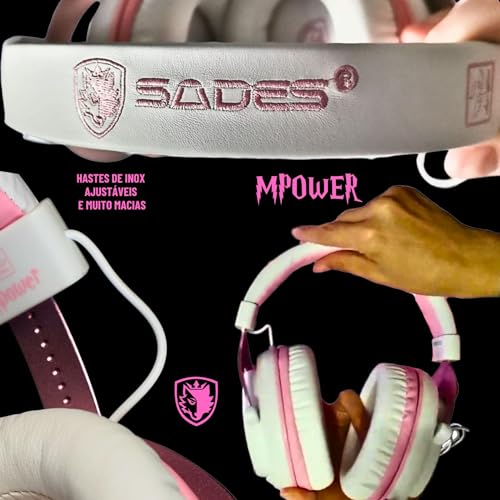
As an Amazon Associate we earn from qualifying purchases. Product prices and availability are accurate as of the date/time indicated.

EKSA 2.4GHz Wireless Gaming Headset for PS5,PC,PS4,Switch,Mobile,Mac | Bluetooth Gaming Headphones with Microphone, RGB, 30ms Latency, 50H Battery, USB&Type-C Ultra, PC Gaming Headset for Computer
As an Amazon Associate we earn from qualifying purchases. Product prices and availability are accurate as of the date/time indicated.

USOTSO MPOWER Stereo Gaming Headset for PS4, PC, Mobile, Noise Cancelling Over Ear Headphones with Retractable Flexible Mic & Soft Memory Earmuffs for Laptop Mac Games-Angel Edition


As an Amazon Associate we earn from qualifying purchases. Product prices and availability are accurate as of the date/time indicated.
Prices shown are approximate and for reference only. Prices change often, so please check the current price on Amazon before you buy.
Latency figures, where makers publish them, vary by device and codec; verify gaming-mode and dongle compatibility with your phone. Specs summarize manufacturers’ published information for current versions. Ratings are editorial, weighing in-game latency, voice quality, gaming sound, session comfort and battery, and value.
The Six Mobile Gaming Headphones Reviewed
1. Razer Hammerhead Pro Class: Best Overall
Razer’s flagship gaming earbuds lead because they attack the category’s founding problem with the category’s strongest tool: a low-latency path, by gaming mode and, in the line’s dongle models, by a USB-C HyperSpeed connection that brings wireless delay into wired’s neighborhood, in a bud that also carries ANC for the commute, a gaming-tuned sound, and microphones coached by the brand’s streaming years. Its price is the premium shelf’s, its case and battery are the class’s working standard, and its fit should be auditioned as every earbud’s must. For the competitive mobile player who wants one device for the ladder and the day, it is the recommendation this guide defends, the earbud whose latency story survives the stopwatch rather than the brochure.
2. ASUS ROG Cetra: Best Gaming Earbuds Alternative
The Cetra line brings the Republic of Gamers’ tuning to the pocket: a low-latency gaming mode, ANC in its class, a sound signature voiced for games’ cues, and pricing that undercuts the leader while keeping the essential specification. Its microphones handle the squad’s business in ordinary environments credibly, its case is the class’s, and its app gives the EQ the guide’s sound doctrine asks for. For the player whose phone and library live in the Android gaming world the ROG ecosystem serves, it is the coherent row, and its rating reflects a bud that concedes the flagship’s last refinements and keeps its whole argument.
3. SteelSeries Arctis Nova Class: Best Over-Ear
The Arctis line is the over-ear answer for the player whose sessions are long and whose platforms are several: gaming-bred sound with a respected EQ platform, a retractable or detachable microphone that remains the voice geometry’s champion, comfort engineered for hours, and, in the models that carry it, dual wireless that lets the phone and the console share one headset across the evening. Its size is the over-ear’s honest bulk, its phone use is Bluetooth or dongle by model and should be specified at purchase, and its price is the serious class’s. For the mobile gamer who also plays at a desk, it is the one-headset solution, and the table’s over-ear standard.
4. JBL Quantum Class: Best Value Gaming Brand
JBL’s Quantum line spreads the gaming specification across prices the mainstream can reach: headsets and earbuds with low-latency positioning, game-voiced sound with the house’s energetic signature, and microphones adequate to the squad’s standards at their tier. Its models vary widely, which is the line’s caution and its opportunity, the buyer choosing by the connection and latency specification of the exact model rather than by the badge. For the player equipping on a budget who wants a gaming maker’s tuning rather than a music maker’s afterthought, it is the value row with a pedigree, and its rating reflects breadth graded at its better models’ standard.
5. Soundcore Gaming Earbuds Class: Best Dongle Value
Soundcore’s gaming earbuds, the VR P10 being the reference, popularized the dongle at a value price: a USB-C transmitter in the case that gives phones, handhelds, and laptops the low-latency connection Bluetooth alone approximates, with pass-through charging on the dongle in its design and a sound and microphone set in the honest class. Its compromises are its price’s, ANC and refinement traded away for the connection’s sake, and for the player whose games punish latency, that trade is the correct one made openly. It is the row that proves the category’s central lesson, that for gaming, the wire you cannot see, the protocol, matters more than the driver you can, and its rating rewards the lesson’s clarity.
6. USB-C Wired IEM Class: Best Zero-Lag Budget
The wired row closes the table as its conscience: a USB-C in-ear monitor of the modern budget class, DSP-tuned, microphone in its cable, delivering zero-latency audio and excellent sound for the price of a skin, with no battery to die in the final and no mode to enable. Its costs are the cable’s, the grip’s negotiation, the pocket’s tangle, the dongle’s absence where a case’s port sits awkwardly, and they are the costs its constituency, rhythm gamers, purists, and the wisely frugal, pays with a shrug. Every wireless row above should be bought in its knowledge: if the cable is acceptable, this is the performance-per-dollar summit of the entire category, and the wireless premium is buying freedom, which is a fine thing to buy with open eyes.
Buying Guide: How to Choose the Best Headphones for Gamers on Mobile
Step One: Match the Latency Budget to Your Games
Sort your library by its timing honesty. Rhythm games and the highest tiers of competitive shooters, where the input-to-sound loop is the game, belong on wired or on a dongle connection, and the buyer in those rows should spend on the connection before the driver. The broad middle, shooters and racers and action titles at ordinary competitive levels, is served by a true gaming mode’s low-latency Bluetooth, provided the phone and the buds agree on it, a compatibility to verify per model since gaming modes are ecosystems as much as features. Story, strategy, and casual titles forgive standard Bluetooth entirely, and their player should spend the same money on sound and comfort instead. Write your tier down before shopping, because the category’s marketing sells the flagship’s latency to players whose games cannot spend it, and sells cinematic bass to players whose footsteps it will bury, and both errors are prevented by this one honest paragraph of self-knowledge.
Step Two: Test Voice, Fit, and the Phone’s Own Settings
Audition as the guide directs: a voice call placed from your real playing environment, judged by the friend on the other end without charity; a fit worn for a full session’s length, earbuds through their tip sizes, over-ears through their clamp’s third hour; and the connection walked through your phone’s grip, case, and port geometry, since a dongle that fights the case or a cable that exits into your palm is a daily tax no specification refunds. Then set the phone’s side of the bargain: the game’s voice and audio settings reviewed, noise suppression and chat mixing set deliberately, the headphone’s app installed and its gaming mode, EQ, and firmware updated before the first ranked match rather than after the first confusing one. Buy from a seller whose returns honor a failed audition, because ears and their canals are the least standardized hardware in the entire setup, and a headphone that is perfect for the reviewer and wrong for your head is, for you, simply wrong.
Step Three: Build the Session Kit and the Care Routine
Complete the purchase with the small system that keeps it performing: the case charged in the bag’s same pocket daily, a short USB-C cable for the dongle’s pass-through and the wired backup, spare tips in the size your ears chose, and the wired row of this table, at its price, considered as the kit’s insurance, the backup that turns a dead battery or a forgotten case from a ruined session into a shrug. Care follows the audio guide’s usual liturgy, tips and cushions cleaned and replaced on their rhythm, firmware kept current, batteries kept from the car’s summer and the drawer-dead winter where the habit is easy. And keep the settings’ note, gaming mode’s location, EQ’s preset, the squad’s verdict on your voice, in the phone’s notes, because the headphone will outlast your memory of its configuration, and the player who can restore their setup in a minute owns a system, while the player who cannot owns a gadget, a distinction this site applies to every category it grades and to gaming most of all, where the session, ranked and fleeting, waits for no one’s menu-diving.
Frequently Asked Questions About Headphones for Mobile Gamers
Are Bluetooth headphones too laggy for mobile gaming?
Standard Bluetooth, for the most timing-critical games, yes; modern gaming-mode Bluetooth, for the great majority of mobile play, no, and the difference between those sentences is the category’s whole education. The plain connection’s delay, commonly a few hundred milliseconds, is felt in rhythm games as failure and in shooters as a subtle wrongness at competitive levels, while a dedicated low-latency mode cuts the delay by a large factor, into the range most players in most titles cannot distinguish from wired in a blind test. The variables are the phone and the buds agreeing on the mode, the game’s own audio engine, and the player’s tier, which is why this guide’s steps sort the library first and let it choose the connection. The player who wants certainty rather than sufficiency has two exact answers, the dongle connection and the wire, both in the table, both honest, and the player who buys a gaming-mode bud for a battle royale and tests it in their own matches will very likely close the question for a season, which is the correct lifespan for a latency anxiety.
Earbuds or over-ear headphones for mobile gaming?
The earbuds own the mobile context, pocketed with the phone, charged in their case, worn on the commute and in the cafe without announcing a hobby, and their modern gaming modes serve the library’s middle completely; the over-ears own the session, the long evening’s comfort, the bigger soundstage’s directional ease, the boom microphone’s voice, and the battery that thinks in days. The player’s geography decides: the gamer whose matches happen wherever they are buys the buds and accepts the microphone’s algorithms; the gamer whose matches happen in a chair, at home, with the phone as one platform among several, buys the over-ear and accepts its bulk on the rare outing. The hybrid answer, one of each at this table’s value rows, costs less than one flagship of either kind and covers the whole map, which is why so many kits end there, and why this guide’s final counsel is to let the second purchase be made by the first’s evidence, a season of sessions teaching where your gaming actually lives more truthfully than any prediction, including this one.
Do I need a gaming brand, or will good music headphones work?
Good music headphones work for the library’s forgiving majority and fail the competitive minority at two specific joints, latency and voice, which is a more useful answer than either brand loyalty or brand scorn. A music flagship’s standard Bluetooth delay is the plain connection of the FAQ above, its microphones are tuned for the quiet call rather than the street’s squad, and it offers no gaming mode because its maker’s customers never asked; within those limits its sound will often exceed a gaming model’s at the same price, since the gaming premium buys protocol and microphone before it buys drivers. The gaming brand’s premium is therefore rational exactly where its two joints bear weight, the ranked shooter, the rhythm title, the daily voice squad, and wasted where they do not. Read the table with that lens and its mixed badges explain themselves: it is a table of joints, not of logos, and the buyer who shops the joints will be served by whichever name happens to have built them best this year.
Why does my squad say my voice sounds bad, and how do I fix it?
Work the causes in their order of frequency, because the headphone is only the third likeliest culprit. First, the settings: the game’s voice options, input device, noise suppression, and chat volume, and the phone’s permission for the game’s microphone access, each capable of producing robotic, distant, or echoing voice from perfect hardware, and each free to fix in the menus this guide’s steps tell you to visit before the first match. Second, the environment and geometry: the earbud’s microphone fighting a windy street, a fan aimed at the player, a phone lying face-down on the desk muffling its own mic where the design uses it, answered by position and by the room rather than by purchase. Third, the hardware’s tier, the budget bud’s microphone in a loud world being a genuine limit, answered by the boom’s geometry in the over-ear rows or by the wired cable’s mic held closer. The diagnostic that separates them is the call test in a quiet room: clear there and bad in the field is environment; bad everywhere is settings or hardware, in that order of suspicion, and the squad, consulted honestly, will tell you which fix worked, since they have been grading your voice, unkindly and accurately, all along.
Related guides
- Best Tripod vs Monopod for Student Travel Photography in 2026: How to Pick a Tripod vs Monopod for Student Travel Photography That Is Light, Stable, and Works for Your Camera on the Road
- Best MicroSD Card for Baby Monitors: 6 Best MicroSD Card for Baby Monitors Picks in 2026
- Best Budget Phone Lens Under 50 in 2026: Clip-On Wide, Macro, and Telephoto Lenses That Are Actually Worth Carrying
- How to Choose Phone Mount Suction Strength in 2026: How to Choose a Phone Mount Suction Strength That Holds Your Phone Securely, Is Easy to Use, and Works for Your Car
More from Amazon
Programs that pair well with the guide above. Offers and eligibility are set by Amazon and may change.
Set up recurring deliveries of everyday items on eligible products. Terms and savings are set by Amazon.
Explore Subscribe & SaveFree shipping on eligible items, Prime Video and more. Eligible new members can start with a free trial.
Start a Prime free trialAudiobooks and podcasts to listen to on the go. Eligible new members can start with a free trial.
Try Audible freeRead from a large library of eBooks and audiobooks on any device. Check Amazon for current plans.
Explore Kindle UnlimitedAs an Amazon Associate we earn from qualifying purchases.

Write Your Review
No reviews yet. Be the first to share your experience!