
What's inside
As an Amazon Associate I earn from qualifying purchases. This post may contain affiliate links at no extra cost to you.
The best condenser microphone for voice acting is the one that captures your voice clearly, with warmth and detail, without picking up too much room noise or sounding harsh on sibilants. Voice acting is different from streaming, podcasting, or singing. You need a microphone that can handle a whisper, a shout, a character voice, and a long narration session, all in the same recording, without distortion or a thin, tinny sound.
A condenser microphone is a good choice for voice acting because it is sensitive, it captures detail, and it gives you a full, natural sound. That sensitivity also means it will pick up room noise, keyboard clicks, and a noisy computer fan if your room is not treated. The right microphone for you depends on your voice, your room, your budget, and whether you record with an audio interface or directly via USB.
This guide compares real, currently sold condenser microphones that work well for voice acting. Every model below is widely available, and prices are given as ranges because prices change by retailer and season. We compare polar pattern, connection type, best use, and price, then explain how to choose a microphone based on your voice, your room, and your recording setup.
Disclosure: As an affiliate site, TechCats.net may earn a commission from qualifying purchases made through links on this page, at no extra cost to you. Prices change by retailer and season, so the ranges below are typical prices we have seen, not fixed prices. Polar pattern, connection, and specifications are based on manufacturer listings and vary by model, so check the exact listing before you buy.
Our Top Picks
Best Condenser Microphone for Voice Acting at a Glance: Comparison Table
Use this table to compare the leading condenser microphones for voice acting side by side. Polar pattern, connection, best use, and price matter most, so compare those first, then read the reviews below for the details that matter for your voice.
| Condenser Microphone Model | Polar Pattern | Connection | Best Microphone Use | Typical Price Range | Rating |
|---|---|---|---|---|---|
| Rode NT1 5th Generation Microphone | Cardioid | XLR and USB | Best overall condenser microphone for voice acting | $200 – $250 | 4.9 / 5 |
| Audio-Technica AT2020 Microphone | Cardioid | XLR | Best condenser microphone for voice acting for a low price | $80 – $110 | 4.8 / 5 |
| Audio-Technica AT2035 Microphone | Cardioid | XLR | Best condenser microphone for voice acting for a warm sound | $130 – $170 | 4.8 / 5 |
| Neumann TLM 102 Microphone | Cardioid | XLR | Best condenser microphone for voice acting for professional sound | $700 – $800 | 4.9 / 5 |
| Blue Yeti Microphone | Cardioid and other patterns | USB | Best condenser microphone for voice acting for USB simplicity | $80 – $110 | 4.7 / 5 |
| AKG P220 Microphone | Cardioid | XLR | Best condenser microphone for voice acting for a large diaphragm | $130 – $170 | 4.7 / 5 |
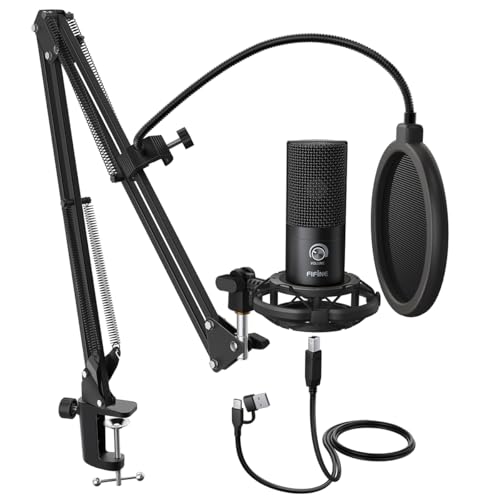
FIFINE T669 Studio Condenser USB Microphone for Recording Podcasting | Computer Microphone Kit for Voice Overs, Adjustable Boom Arm Stand, Shock Mount for Vocal, Instruments, Gaming, Streaming
As an Amazon Associate we earn from qualifying purchases. Product prices and availability are accurate as of the date/time indicated.

MAONO A04 Gen2 XLR/USB Condenser Microphone Kit for PC Podcast Recording | 192kHz/24Bit Cardioid Metal Mic with Software, Plug & Play for Content Creation, Streaming, Gaming, Home Studio, YouTube
As an Amazon Associate we earn from qualifying purchases. Product prices and availability are accurate as of the date/time indicated.

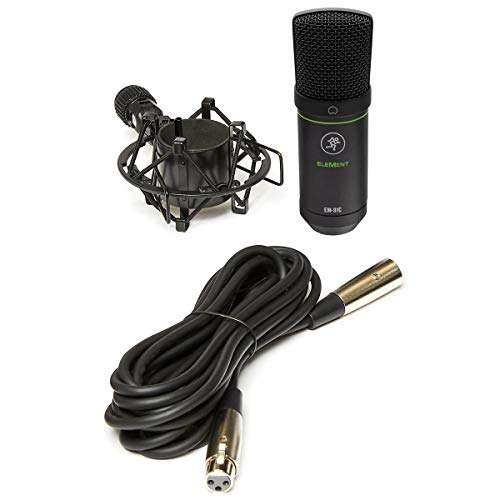
Mackie EM-Series, Large-Diaphragm Condenser Microphone (EM-91C)

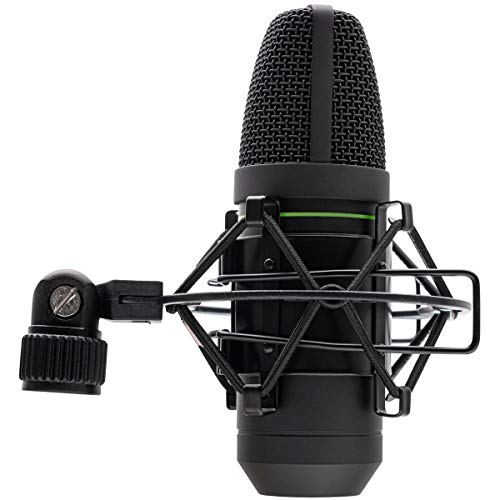
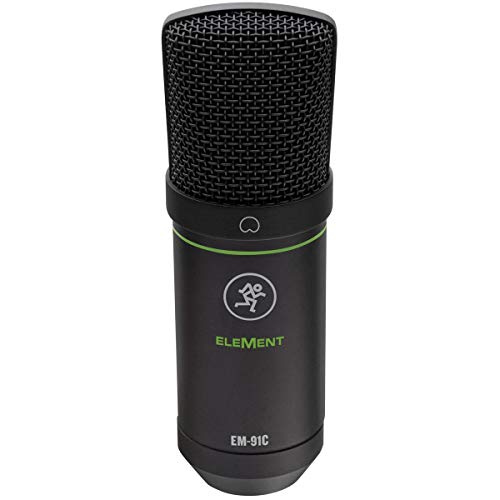
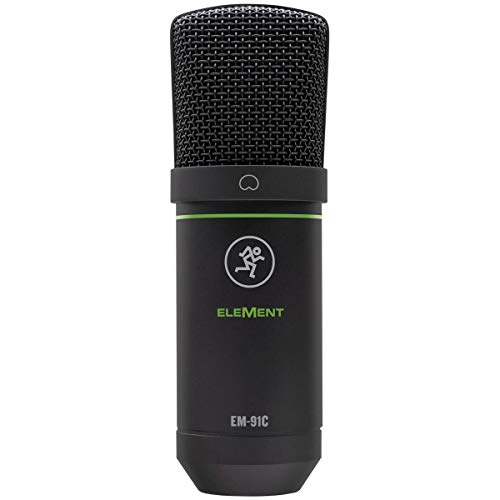
As an Amazon Associate we earn from qualifying purchases. Product prices and availability are accurate as of the date/time indicated.
Best Condenser Microphone for Voice Acting Reviewed for 2026
1. Rode NT1 5th Generation Microphone – Best Overall Condenser Microphone for Voice Acting
The Rode NT1 5th Generation is our top pick for most voice actors because it combines very low self-noise, a clear and natural sound, and both XLR and USB connections in one microphone. That means you can start with USB if you do not have an audio interface, and switch to XLR later when you upgrade your setup. The cardioid pattern picks up your voice from the front and rejects sound from the back, which helps in a home studio.
For voice acting, the NT1 is useful because it is sensitive enough to capture a whisper and a quiet character voice, but it also handles louder passages without sounding harsh. It has a low self-noise rating according to the manufacturer listing, which means the microphone itself adds very little hiss to your recording. That matters for voice acting, where a quiet background is essential for a professional audition or a finished recording.
At a typical price in the $200 to $250 range, it is a fair price for a microphone that can be used for both USB and XLR recording. It is worth it if you want a microphone that will last through many auditions and projects, you want a clear, professional sound, and you want the flexibility to use USB now and XLR later.
2. Audio-Technica AT2020 Microphone – Best Condenser Microphone for Voice Acting for a Low Price
The Audio-Technica AT2020 is a classic budget condenser microphone that has been used for voice acting, podcasting, and music for many years. It is a cardioid XLR microphone, it needs phantom power from an audio interface, and it gives you a clear, detailed sound for a low price. It is a good choice if you are starting voice acting and you want a reliable microphone without spending a lot of money.
For voice acting, the AT2020 is practical because it is sensitive, it captures detail, and it is easy to use with a basic audio interface. It will pick up room noise if your room is not treated, so you should record in a quiet room, use a pop filter, and keep the microphone close to your mouth. It is not as quiet as the Rode NT1, and it does not have a USB option, but for the price it offers excellent value.
At a typical price in the $80 to $110 range, it is the most affordable XLR microphone in this guide. Choose it if you are a beginner, you already have an audio interface, or you want a low-cost microphone that is proven for voice work.
3. Audio-Technica AT2035 Microphone – Best Condenser Microphone for Voice Acting for a Warm Sound
The Audio-Technica AT2035 is a step up from the AT2020, with a larger diaphragm, a switchable high-pass filter, and a pad for louder sounds. It is a cardioid XLR microphone, it needs phantom power, and it gives you a warm, full sound that is flattering for many voices. It also comes with a shock mount in many listings, which helps reduce vibrations from a desk or a floor.
For voice acting, the AT2035 is useful because it handles a wide range of voices and volumes, from a soft narration to a loud character voice. The high-pass filter can help reduce low-frequency rumble from a room, and the pad can help if you record loud passages. It is a good choice if you want a microphone that is a little warmer than the AT2020, and you want a shock mount included.
At a typical price in the $130 to $170 range, it costs more than the AT2020 but offers a warmer sound and more features. Choose it if you want a microphone that is good for voice acting and for music, you want a shock mount, or you prefer Audio-Technica’s sound.
4. Neumann TLM 102 Microphone – Best Condenser Microphone for Voice Acting for Professional Sound
The Neumann TLM 102 is a premium condenser microphone made for professional voice work, with a cardioid pattern, an XLR connection, and a sound that is known for clarity and presence. It is a large-diaphragm microphone, it needs phantom power, and it is designed to give you a detailed, professional recording that needs little processing. It is a popular choice for voice actors who record in a treated studio and want the best sound they can get.
For voice acting, the TLM 102 is useful because it captures nuance, it handles a wide dynamic range, and it gives your voice a presence that stands out in an audition. It is also very sensitive, so it will pick up room noise if your room is not treated. It is best used in a quiet, treated room, with a good audio interface, a pop filter, and a shock mount. It is not a good choice for a noisy room or for a beginner who has not yet treated their recording space.
At a typical price in the $700 to $800 range, it is the most expensive microphone in this guide. It is worth it if you are a professional voice actor, you record in a treated studio, and you want a microphone that is known for professional voice work. If you are a beginner, the Rode NT1 or Audio-Technica AT2020 is a better value.
5. Blue Yeti Microphone – Best Condenser Microphone for Voice Acting for USB Simplicity
The Blue Yeti is a USB condenser microphone that is easy to set up and use without an audio interface. It has multiple polar patterns, including cardioid, bidirectional, omnidirectional, and stereo, though cardioid is the best pattern for voice acting because it picks up your voice from the front and rejects sound from the back. It plugs in via USB, it has a headphone jack for monitoring, and it has a gain control on the microphone itself.
For voice acting, the Yeti is practical because it is simple to use, it is affordable, and it works with most computers without extra gear. The sound is clear, though it is not as detailed or as quiet as an XLR microphone like the Rode NT1 or Audio-Technica AT2020. It will also pick up more room noise than a close-miked XLR microphone, so you should record in a quiet room and keep the microphone close to your mouth.
At a typical price in the $80 to $110 range, it is a good choice if you want a USB microphone for voice acting, you do not have an audio interface, or you want a simple setup for auditions and practice. If you want the best sound quality, an XLR microphone with an interface is a better long-term choice.
6. AKG P220 Microphone – Best Condenser Microphone for Voice Acting for a Large Diaphragm
The AKG P220 is a large-diaphragm condenser microphone with a cardioid pattern, an XLR connection, and a switchable high-pass filter and pad. It is made for vocals and voice work, and it gives you a warm, full sound that is flattering for many voices. It comes with a shock mount in many listings, which helps reduce vibrations.
For voice acting, the P220 is useful because it handles a wide range of volumes, it has a large diaphragm that captures detail, and it is a good choice for both narration and character work. It needs phantom power from an audio interface, and it should be used in a quiet room with a pop filter. It is not as well known as the Rode or Audio-Technica models, but it offers good value for a large-diaphragm microphone.
At a typical price in the $130 to $170 range, it is priced in line with the Audio-Technica AT2035. Choose it if you want a large-diaphragm microphone, you prefer AKG, or you want a microphone that is good for both voice acting and music.
Buying Guide: How to Choose the Best Condenser Microphone for Voice Acting
The best condenser microphone for voice acting for you depends on your voice, your room, your budget, and whether you record with an interface or via USB. Start with your recording setup, then compare sound, noise, and price. A microphone that fits your voice and your room is better than a microphone with the highest specs on paper.
Voice Type and Microphone Sound: Warm vs Bright
Microphones sound different, and the best one for you depends on your voice. A warm microphone, like the Audio-Technica AT2035 or AKG P220, can be flattering for a bright or thin voice, because it adds fullness. A clear microphone, like the Rode NT1, is good for most voices because it is neutral and detailed. A bright microphone can sound harsh on sibilants, especially if your voice is already bright.
If possible, test a microphone with your voice before you buy, or listen to sample recordings of the same microphone with a voice similar to yours. Pay attention to how it handles sibilants, plosives, and quiet passages. A microphone that sounds good for one voice may not sound good for another, so personal testing matters more than reviews alone.
Room Treatment and Noise: Why Your Room Matters More Than the Mic
Room treatment matters more than microphone choice for voice acting. A condenser microphone is sensitive, and it will pick up echo, computer fan noise, traffic, and other room sounds. If your room is untreated, even a premium microphone like the Neumann TLM 102 will sound bad. If your room is treated with blankets, foam, or a portable vocal booth, even a budget microphone like the Audio-Technica AT2020 can sound good.
Before you buy a new microphone, try to improve your room. Record in a small, quiet room, close windows and doors, turn off fans and air conditioning if you can, and use blankets or moving blankets to reduce echo. Use a pop filter to reduce plosives, and keep the microphone close to your mouth, about 6 to 8 inches away, for a clear sound with less room noise.
XLR vs USB: Interface or Direct Connection
XLR microphones, like the Rode NT1, Audio-Technica AT2020, and Neumann TLM 102, need an audio interface that provides phantom power and converts the analog signal to digital. An interface gives you better sound quality, lower noise, and more control over gain, but it costs extra and requires setup. USB microphones, like the Blue Yeti and the Rode NT1 in USB mode, plug directly into a computer and are easier to use, but they may not sound as good as a good XLR setup.
For voice acting, an XLR microphone with a good interface is usually the better long-term choice, because it gives you more flexibility and better sound. A USB microphone is a good starting point if you are a beginner, you do not have an interface, or you want a simple setup for auditions. The Rode NT1 5th Generation is a good compromise, because it offers both XLR and USB in one microphone.
Price, Accessories, and What You Actually Need
Price depends on whether you buy a microphone alone or as part of a kit. A budget XLR microphone like the Audio-Technica AT2020 costs $80 to $110, plus the cost of an interface, a pop filter, and a shock mount. A mid-range microphone like the Rode NT1 costs $200 to $250 and offers both XLR and USB. A premium microphone like the Neumann TLM 102 costs $700 to $800, plus the cost of a good interface and room treatment.
Accessories also matter. You will need a pop filter to reduce plosives, a shock mount to reduce vibrations, a mic stand or boom arm, and headphones for monitoring. A microphone that comes with a shock mount, like the Audio-Technica AT2035 or AKG P220, is a better value than one that does not. Do not buy a premium microphone before you have treated your room and bought basic accessories, because those will make a bigger difference to your sound than the microphone alone.
Best Condenser Microphone for Voice Acting: FAQ
What is the best condenser microphone for voice acting?
For most voice actors, the Rode NT1 5th Generation is the best overall condenser microphone because it offers very low self-noise, a clear and natural sound, and both XLR and USB connections at a typical price in the $200 to $250 range. If you want a low price, the Audio-Technica AT2020 is a good choice at $80 to $110. If you want a warm sound, the Audio-Technica AT2035 is a strong option at $130 to $170. If you want professional sound, the Neumann TLM 102 is the best choice here at $700 to $800. If you want USB simplicity, the Blue Yeti is a practical option at $80 to $110. If you want a large-diaphragm microphone, the AKG P220 is a good fit at $130 to $170.
Do I need an audio interface for a condenser microphone for voice acting?
You need an audio interface for most XLR condenser microphones, because they need phantom power and a way to convert the analog signal to digital for your computer. An interface like the Focusrite Scarlett Solo or a similar model is a common choice for voice acting. You do not need an interface for a USB condenser microphone like the Blue Yeti, or for a microphone like the Rode NT1 5th Generation when you use it in USB mode. For the best sound quality, an XLR microphone with a good interface is usually better than a USB microphone, but a USB microphone is a good starting point if you do not have an interface yet.
Is a condenser microphone better than a dynamic microphone for voice acting?
A condenser microphone is better than a dynamic microphone for voice acting in most cases, because it is more sensitive, it captures more detail, and it gives you a fuller, more natural sound. A dynamic microphone like the Shure SM7B is less sensitive to room noise, which can be useful in an untreated room, but it needs more gain and it may sound less detailed than a condenser. For voice acting in a treated room, a condenser microphone is usually the better choice. For voice acting in a noisy room, a dynamic microphone may be more forgiving, but treating your room will make a bigger difference than switching microphone types.
How can I make my voice acting recordings sound better with a condenser microphone?
You can make your voice acting recordings sound better by treating your room, using a pop filter, keeping the microphone close to your mouth, and recording in a quiet environment. Record in a small, quiet room, use blankets or foam to reduce echo, turn off fans and other noise sources, and use a shock mount to reduce vibrations. Keep the microphone about 6 to 8 inches from your mouth, use a pop filter to reduce plosives, and monitor your recording with headphones. Test your microphone with your voice before an important audition, and listen back to check for room noise, sibilance, and distortion. These steps will make a bigger difference than buying a more expensive microphone.
FAQ
What is the best condenser microphone for voice acting?
Do I need an audio interface for a condenser microphone for voice acting?
Is a condenser microphone better than a dynamic microphone for voice acting?
How can I make my voice acting recordings sound better with a condenser microphone?
Related guides
- Best Smart Switch for Living Room in 2026: Dimmers and Switches From Lutron, Leviton, and Kasa That Handle LED Bulbs, 3-Way Circuits, and Movie Night Without Flicker
- Best Budget Gaming Speaker with Lights for Gamers in 2026: 7 Speakers That Offer Clear Sound, RGB Lights, and Reliable Use for Gamers
- Best WiFi 6 Router for Students in 2026: Fast, Cheap Routers for Student Houses and Studios — and the Dorm Rule You Must Check Before You Buy Anything
- Best Mesh WiFi System for Student Shared Houses: 6 Systems for Shared Student Homes in 2026
More from Amazon
Programs that pair well with the guide above. Offers and eligibility are set by Amazon and may change.
Set up recurring deliveries of everyday items on eligible products. Terms and savings are set by Amazon.
Explore Subscribe & SaveFree shipping on eligible items, Prime Video and more. Eligible new members can start with a free trial.
Start a Prime free trialAudiobooks and podcasts to listen to on the go. Eligible new members can start with a free trial.
Try Audible freeRead from a large library of eBooks and audiobooks on any device. Check Amazon for current plans.
Explore Kindle UnlimitedAs an Amazon Associate we earn from qualifying purchases.

Write Your Review
No reviews yet. Be the first to share your experience!