
What's inside
- Best Budget Surge Protector for Phone Problems: What It Fixes and What It Cannot
- Best Budget Surge Protector for Phone Problems: Quick Comparison
- The Six Budget Surge Protectors Reviewed
- Buying Guide: How to Fix Phone Power Problems With the Right Surge Protector
- Frequently Asked Questions About Surge Protectors and Phone Problems
As an Amazon Associate I earn from qualifying purchases. This post may contain affiliate links at no extra cost to you.
The best budget surge protector for phone problems starts with a confession this guide will make in its first paragraph rather than its last: most phone problems, the dying battery, the cracked screen, the app misbehaving, have nothing to do with power, and no surge protector at any price will fix them. But a real and under-diagnosed family of phone problems is electrical: the charger that died quietly after a storm, the phone that charges slowly or intermittently on one outlet and fine on another, the touchscreen that behaves erratically while charging on a cheap power strip, the battery that aged in a year of overnight charging on dirty, spiking power. For that family, a proper, certified surge protector with the right USB charging built in is a genuine cure at a budget price, and this guide grades six real, currently sold models for exactly that duty: joule rating and clamping voltage that mean something, certification that can be trusted, USB ports with honest wattage, and the indicator lights that tell you the protection is still alive. It closes with the diagnosis steps that separate the power problems a protector solves from the phone problems that need a cable, a charger, or a repair shop instead.
Learn the surge protector’s honest physics before the table, because the category is sold with numbers arranged to confuse. A surge is a brief voltage spike, from lightning’s distant work, from the grid’s switching, from a large appliance’s motor stopping in your own home, and most are small, frequent, and invisible, wearing electronics down by degrees rather than killing them in a flash. The protector’s job is to clamp, diverting the excess to ground in the nanoseconds before it reaches your devices, and its three honest numbers are its certification, UL 1449 being the standard that means the claims were tested; its clamping voltage, lower being faster to act, with 330 to 400 volts being the respectable band; and its joule rating, the total energy it can absorb across its life, which is a budget that depletes with every event it eats. That last fact writes the category’s saddest truth: a surge protector is a consumable, its protection spent silently over years and storms, which is why the models below are graded partly on whether they tell you, with a protected light that goes out, when they have become merely a power strip wearing a hero’s old uniform.
Our Top Picks
Best Budget Surge Protector for Phone Problems: What It Fixes and What It Cannot
The Phone Problems That Are Actually Power Problems
Diagnose before you shop, with the symptoms that point at the wall rather than at the phone. A charger or charging brick that stopped working after a storm, a flicker, or a known outage is the classic casualty, its small power supply being the most surge-fragile object in the charging chain, and its replacement deserves a protected outlet so its successor does not inherit the fate. Charging that is slow, intermittent, or hot on one outlet or strip and normal on another indicts the source, not the phone, especially where the strip is old, daisy-chained, or shared with a space heater’s or a hair dryer’s appetites. The touchscreen that taps itself, scrolls erratically, or ignores touches while charging, and behaves the moment it is unplugged, is reporting electrical noise from a poor-quality charger or supply, a known phenomenon with the cheapest gas-station bricks, cured by charging from a clean, certified source. And the household whose small electronics die young in a pattern, chargers, bulbs, a router, across seasons, is describing its power, and the phone is simply the device it notices first. For these, the table below is medicine; for the swollen battery, the cracked digitizer, and the phone that will not charge from any known-good source, it is not, and this guide’s FAQ will say so as plainly as its steps say the rest.
Joules, Clamping Voltage, and the Certification That Matters
Shop the three numbers in their order of importance. Certification first: UL 1449 or its ETL equivalent on the package and the unit, because an uncertified surge protector is a claim without a witness, and the budget shelf is salted with power strips wearing surge language they have not earned, a distinction the certification exists to police. Clamping voltage second: the lower figure, 330 volts being the standard’s best common grade, means the protector acts earlier in the spike, letting less through to the phone’s charger, and any model that will not publish its clamping voltage has answered the question by omission. Joules third, and in proportion: for phone-and-charger duty at a desk or nightstand, a rating in the thousand-joule class is a sensible floor and two thousand is comfortable headroom, remembering that the rating is the protector’s lifetime appetite rather than its strength in a single event, and that the connected-equipment warranty printed in large type is a marketing feature whose claims process should be read, once, in the fine print, before it is counted as value. Add the response’s final member, the protected indicator light, without which the owner cannot know the budget has been spent, and the specification is complete enough to grade a shelf.
USB Charging Built In: Wattage Honesty and the Cable’s Vote
A surge protector bought for a phone should charge the phone, and its USB ports must be graded like a charger’s, by wattage per port under load rather than by the sum printed largest. Modern phones fast-charge in the fifteen-to-thirty-watt band over USB-C with Power Delivery, and a protector whose USB-C port delivers in that band replaces the separate brick entirely, one less fragile adapter in the chain and one more outlet freed. Ports that share a small total across four sockets will slow-charge a single phone adequately and a phone-plus-tablet household inadequately, which is fine where it is known and maddening where it is discovered. The cable casts the deciding vote more often than the port does: a worn, counterfeit, or merely ancient cable produces the slow and intermittent charging that sends owners shopping for protectors their outlet never needed, so this guide’s steps test with a known-good cable before any purchase is blamed or credited. Grade the rows below, therefore, as charging stations that also protect, since that is the job as the nightstand defines it, and let the protector whose USB is an afterthought be bought, if at all, with a separate quality charger plugged into its protected outlets, a perfectly honorable arrangement the table’s leaders make unnecessary.
Best Budget Surge Protector for Phone Problems: Quick Comparison
| Surge Protector Model | Key Specs | Best For | Typical Price Range | Rating |
|---|---|---|---|---|
| Belkin SurgePlus USB Wall Mount class | Compact wall-tap design in class, joule rating in line, USB ports, protected indicator positioning | Best budget surge protector for phone problems overall | $20 – $30 | 4.6 / 5 |
| APC SurgeArrest Essential / Performance class | Strip and wall classes in line, published clamping and joules, protected and ground indicators in class | Best trusted certification value | $15 – $35 by model | 4.6 / 5 |
| Anker PowerExtend Surge Protector class | Strip with USB-A and USB-C in class, joule rating in line, slim design positioning | Best USB charging built in | $25 – $40 | 4.5 / 5 |
| Tripp Lite Protect It! class | Wall and strip classes in line, published specs, diagnostic indicators in class | Best spec transparency | $15 – $30 | 4.4 / 5 |
| CyberPower Essential Surge class | Budget strips and taps in line, joule ratings in class, widely available | Best rock-bottom price | $10 – $20 | 4.2 / 5 |
| Belkin 6-Outlet Surge Protector strip class | Strip format in line, joule class positioning, cord length options in class | Best desk strip format | $18 – $28 | 4.4 / 5 |

Eaton Tripp Lite TLP604TEL 6 Outlet Surge Protector + Phone Protection | Power Strip, 4ft Extension Cord, 790 Joules, Under Desk & Wall Mountable, Lifetime Warranty & $20,000 Insurance
As an Amazon Associate we earn from qualifying purchases. Product prices and availability are accurate as of the date/time indicated.

Belkin Power Strip, Belkin Surge Protector - 8 AC Multiple Outlets (3550 Joules) - 6 ft Long Flat Plug Heavy Duty Extension Cord for Home, Office, Travel, Computer Desktop & Phone Charging Brick - Black
As an Amazon Associate we earn from qualifying purchases. Product prices and availability are accurate as of the date/time indicated.

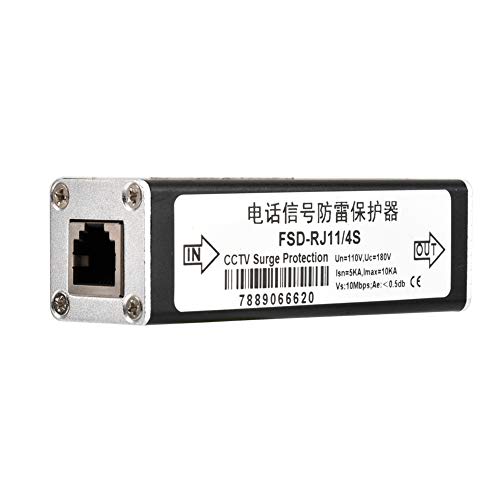
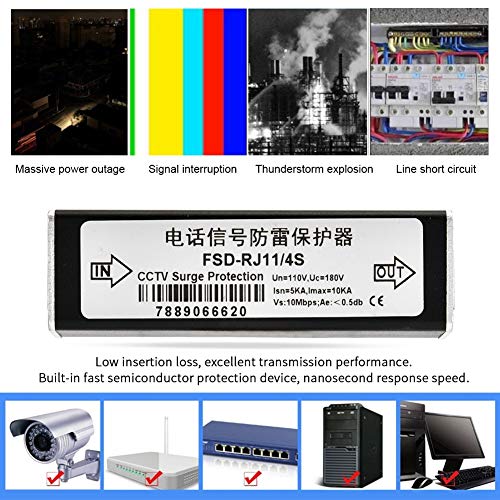
RJ11 Telephone Surge Protector 10KA, Phone Line & DSL Modem Protection, Fax & Landline Arrestor, Overvoltage Protection Device, 2Mbps Transmission, Easy Install Telecom Protector




As an Amazon Associate we earn from qualifying purchases. Product prices and availability are accurate as of the date/time indicated.
Prices shown are approximate and for reference only. Prices change often, so please check the current price on Amazon before you buy.
Joule ratings, clamping voltages, and certifications summarize manufacturers’ published information for current versions; verify UL 1449 or ETL listing on the exact model. Ratings are editorial, weighing certification and published specs, USB charging honesty, protection indication, build, and value.
The Six Budget Surge Protectors Reviewed
1. Belkin SurgePlus Wall Mount: Best Overall for Phones
The wall-mount SurgePlus class fits the phone’s actual geography: it plugs directly into the nightstand or kitchen outlet, no cord to coil, presenting protected outlets and USB charging at the exact point where phones live, with a joule rating in the respectable class, a protected indicator, and Belkin’s long history in the category behind it. Its rotating or compact formats, by model, suit the crowded receptacles phones share with lamps and clocks, and its USB output covers the overnight charge completely and the fast top-up credibly. It is not a whole-desk solution and does not pretend to be. For the single-phone problem the keyword describes, it is the recommendation this guide defends, the right protection in the right form at the budget’s center.
2. APC SurgeArrest Class: Best Trusted Value
APC’s name in power protection was built in server rooms, and its consumer SurgeArrest line carries the house virtues down to budget prices: specifications published in full, clamping, joules, and certification stated where a shopper can find them, and indicator lights for both protection and the building’s wiring faults, the second of which has diagnosed more bad outlets than any feature in this table. Its wall and strip formats cover the nightstand and the desk, its USB offerings vary by model and should be checked against the guide’s wattage doctrine, and its pricing undercuts its reputation in the pleasant direction. For the buyer who wants the category’s establishment choice without a premium, it shares the table’s lead on trust, which in surge protection is not a soft quality but the entire product.
3. Anker PowerExtend Class: Best USB Charging
Anker approaches the category from the charger side, and its PowerExtend protectors show it: USB-C and USB-A ports with output in the modern fast-charge conversation, in slim strips whose design assumes a desk’s visibility, over a surge specification in the honest class with its ratings published. Its joule figures sit in the adequate band rather than at the table’s summit, a trade its buyer should make knowingly, phones being kinder loads than entertainment systems. For the household whose phone problem is really a charging problem, slow, hot, one outlet short, it is the most complete single purchase here, and its rating reflects a protector whose second job is done better than anyone’s and whose first job is done properly.
4. Tripp Lite Protect It! Class: Best Spec Transparency
Tripp Lite publishes its numbers like an engineer wrote the catalog, clamping voltage, joules, response, and certification stated per model across a wide line of wall taps and strips at budget prices, which makes it the shopper’s friend in a category built on fog. Its diagnostic indicators, on the models that carry them, report protection and ground status plainly, and its builds are the utilitarian class’s honest best. Its USB charging, where offered, is the modest kind, and its designs will win no desk’s beauty contest. For the buyer who reads specifications as a hobby and a defense, it is the row that rewards the habit most directly, and in surge protection the habit itself is worth grading.
5. CyberPower Essential Class: Best Rock-Bottom
CyberPower’s budget line puts a certified protector, on the models that carry the listing, which the buyer must verify per model as this guide insists, at prices that reach the category’s floor, in the taps and strips every big-box shelf stocks. Its joule ratings are its price’s, adequate for the phone-and-charger station and not proposed for the entertainment rack, and its indicators and USB vary by model across the line’s breadth. It earns its row as the floor done responsibly: a household that protects every phone station in the home for the price of one premium protector has made a defensible allocation, provided each unit’s certification is the listed kind and the replacement calendar of the steps below is kept, since a budget protector’s smaller joule budget is spent sooner.
6. Belkin 6-Outlet Strip Class: Best Desk Format
The classic Belkin strip covers the desk the wall taps cannot reach: protected outlets in a row, a cord long enough to bring them to where devices actually sit, joule ratings in the line’s respectable class, and on the USB models, charging at the desk’s elbow. Its form is the category’s furniture, unglamorous and exactly fitted, and its owner’s duties are the strip’s eternal ones: no daisy-chaining, no space heater in its outlets, its cord unpinched and unrun under rugs. For the work-from-home phone, tablet, and laptop cluster, it is the practical row, and it closes the table by reminding the reader that the best format is the one that reaches, since protection at the wrong end of the room protects the room’s emptiest corner.
Buying Guide: How to Fix Phone Power Problems With the Right Surge Protector
Step One: Diagnose Before You Buy
Spend ten minutes as an electrician of your own symptoms, because the diagnosis decides whether this purchase is medicine or decoration. Test the suspect charging setup with a known-good cable and a known-good charger on a different outlet, ideally in another room: if the phone charges normally there, the fault lives in the original chain, cable first, charger second, outlet or strip third, in the order of their failure rates and their prices. Note the storm history, the flickers, the other small electronics that have died young in the house, and check the existing strip, if any, for its protected light, since a dark indicator on a five-year-old protector is a diagnosis complete in itself. If the phone misbehaves on every known-good source, slow, hot, erratic, then the problem is the phone’s, its port lint-filled or damaged, its battery aged, its software due an update, and the honest next step is a cleaning, a battery health reading in its settings, or a repair counter, not a protector. Buy the protector when the evidence names the power, and buy it then with confidence, because for that family of problems it works.
Step Two: Buy Certified, Sized to the Station, With USB That Matches the Phone
At the shelf or the listing, apply the guide’s filters in their order and let them eliminate. Certification, UL 1449 or ETL, present on the exact model, non-negotiable at any price. Clamping voltage published and in the 330-to-400-volt band. Joules in the thousand class at minimum for a phone station, more where the house’s power has a history or the station serves a laptop as well. A protected indicator light, so the unit can announce its own retirement. And USB that matches the phone’s appetite, a USB-C Power Delivery port in the twenty-watt class or better where fast charging matters, or honest acceptance of slow overnight charging where it does not, with a quality standalone charger on a protected outlet as the equally valid alternative. Place one protector per station, nightstand, desk, kitchen counter, rather than one heroic unit and a house of extension cords, since protection lives at the point of use and cords strung across rooms are their own category of problem wearing a solution’s clothes.
Step Three: Install It Correctly and Replace It on Schedule
Installation is three rules and a calendar. Plug the protector directly into the wall receptacle, never into another strip or protector, since daisy-chaining voids the protection’s design and its warranty in one gesture. Keep its load to its station, phones, tablets, chargers, a laptop, and never a space heater, a hair dryer, or any high-draw appliance, whose appetites belong on the wall and whose motors are themselves surge sources. Check the ground, a protector on an ungrounded outlet, reported by its own wiring-fault light where fitted or by the three-prong tester every house should own, cannot divert what it has nowhere to send, and the fix is an electrician’s, not a shopper’s. Then the calendar: note the purchase date on the unit in marker, glance at the protected light when you pass, replace the unit after any major known event, a nearby strike, a long outage with a rough return, and in any case on the years’ schedule your power’s history suggests, three to five being the common guidance for active stations. A protector maintained so is a system; a protector bought and forgotten is a lottery ticket expiring in a drawer, and the phone, which reports power problems more honestly than any other device you own, deserves the system.
Frequently Asked Questions About Surge Protectors and Phone Problems
Can a surge protector fix my phone’s charging problems?
It can fix the charging problems that are actually power problems, and this guide’s diagnosis exists to tell you whether yours are. If the phone charges normally on a known-good cable and charger at a different outlet, if a charger died after a storm, if the touchscreen misbehaves only while charging from a cheap brick, or if the house eats small electronics young, then yes, a certified protector with clean, adequate USB charging addresses the cause, and its effect is usually immediate and total. If the phone charges slowly or erratically from every source, the causes are the phone’s own, a lint-packed or damaged port, an aged battery whose health reading in settings will confess it, a failing cable in your hand rather than in the wall, or software in need of its update, and no protector will help beyond ruling the power out, which is itself a diagnostic service worth the price. The mature view is that the protector is one instrument in the charging chain’s health, the chain being only as honest as its weakest link, and the steps above test the links in their order.
How many joules do I need for phone charging?
For a phone station, a rating around a thousand joules is a sensible floor and the two-thousand class is comfortable, with the understanding this guide has taught: joules measure the protector’s lifetime appetite for surges, not a force field’s strength, so the right figure depends on your power’s temperament, a house with frequent flickers, storms, and rural lines spending a protector’s budget faster than a city apartment on a modern grid. What matters more than chasing the largest number is the combination around it, certification that the number was tested, a clamping voltage in the respectable band so events are caught early, and an indicator light so you know when the budget, whatever it was, has been spent. A modest, certified, indicated protector replaced on schedule protects a phone better than a giant uncertified one forgotten for a decade, which is the category’s whole moral in one comparison, and why this guide grades trust and transparency alongside the arithmetic.
Is a power strip the same as a surge protector?
No, and the difference is the reason this category requires reading rather than grabbing: a power strip is only a row of outlets on a cord, offering no surge protection whatsoever, while a surge protector contains the clamping components, and the two are sold side by side in near-identical bodies, distinguished by their labeling, their certification, and their specifications. The checks are quick and absolute: the words surge protection with a joule rating and a clamping voltage, and a UL 1449 or ETL listing for surge duty, since a strip may carry a different listing for its cord and outlets that says nothing about surges. The saddest version of the confusion is the aging protector whose budget is spent, which has become a strip while keeping a protector’s face, answered by the indicator light and the replacement calendar. When in doubt at the shelf, the model that publishes its numbers is the protector, and the model that publishes only its outlet count is furniture, priced accordingly and to be bought, if at all, without illusions.
Can a surge damage my phone while it is charging?
Yes, through the charger, which is both the phone’s lifeline and its surge path: a spike arriving at the outlet passes into the charging brick, whose small power supply is the chain’s most fragile component, and a surge large enough to kill the brick can, in the same event or through the brick’s failure, reach the phone’s charging circuitry, which is why storm-killed chargers occasionally take the phone’s ability to charge with them. The everyday risk is smaller and cumulative, the frequent minor spikes of grid and household life aging chargers and stressing the phone’s power management across years, the slow version of the same story. The defenses are the guide’s whole content, a certified protector at the phone’s station, quality chargers rather than the counter’s cheapest, and the storm habit your grandparents were right about, unplugging the phone during a serious electrical storm when you are home to do it, since the only perfect surge protector is an air gap. None of this asks for anxiety; it asks for a twenty-dollar certified unit at the nightstand and the calendar’s glance, after which the phone’s power is as clean as the house can make it, and its remaining problems will be, reassuringly, its own.
Related guides
- Best Console Travel Bag for Students in 2026: Switch, Steam Deck, and PS Portal Cases That Survive the Backpack, the Bus, and the Dorm
- Best Power Bank for Student Road Trips in 2026: How to Pick a Power Bank That Keeps Your Phone, Tablet, and Laptop Charged on the Road
- Ultimate Ears vs JBL Speaker Pros Cons in 2026: Wonderboom, Megaboom, Flip, and Charge Compared for a Pairing Parish That Locks a House In, a Sound Read at a Room’s Real Distances, and a Battery Believed From a Whole Weekend
- How to Clean Speaker Grille Guide in 2026: A 7-Step Guide to Cleaning a Speaker Grille Without Pushing Dust In, Scratching the Cloth, or Damaging the Driver
More from Amazon
Programs that pair well with the guide above. Offers and eligibility are set by Amazon and may change.
Set up recurring deliveries of everyday items on eligible products. Terms and savings are set by Amazon.
Explore Subscribe & SaveFree shipping on eligible items, Prime Video and more. Eligible new members can start with a free trial.
Start a Prime free trialAudiobooks and podcasts to listen to on the go. Eligible new members can start with a free trial.
Try Audible freeRead from a large library of eBooks and audiobooks on any device. Check Amazon for current plans.
Explore Kindle UnlimitedAs an Amazon Associate we earn from qualifying purchases.

Write Your Review
No reviews yet. Be the first to share your experience!